

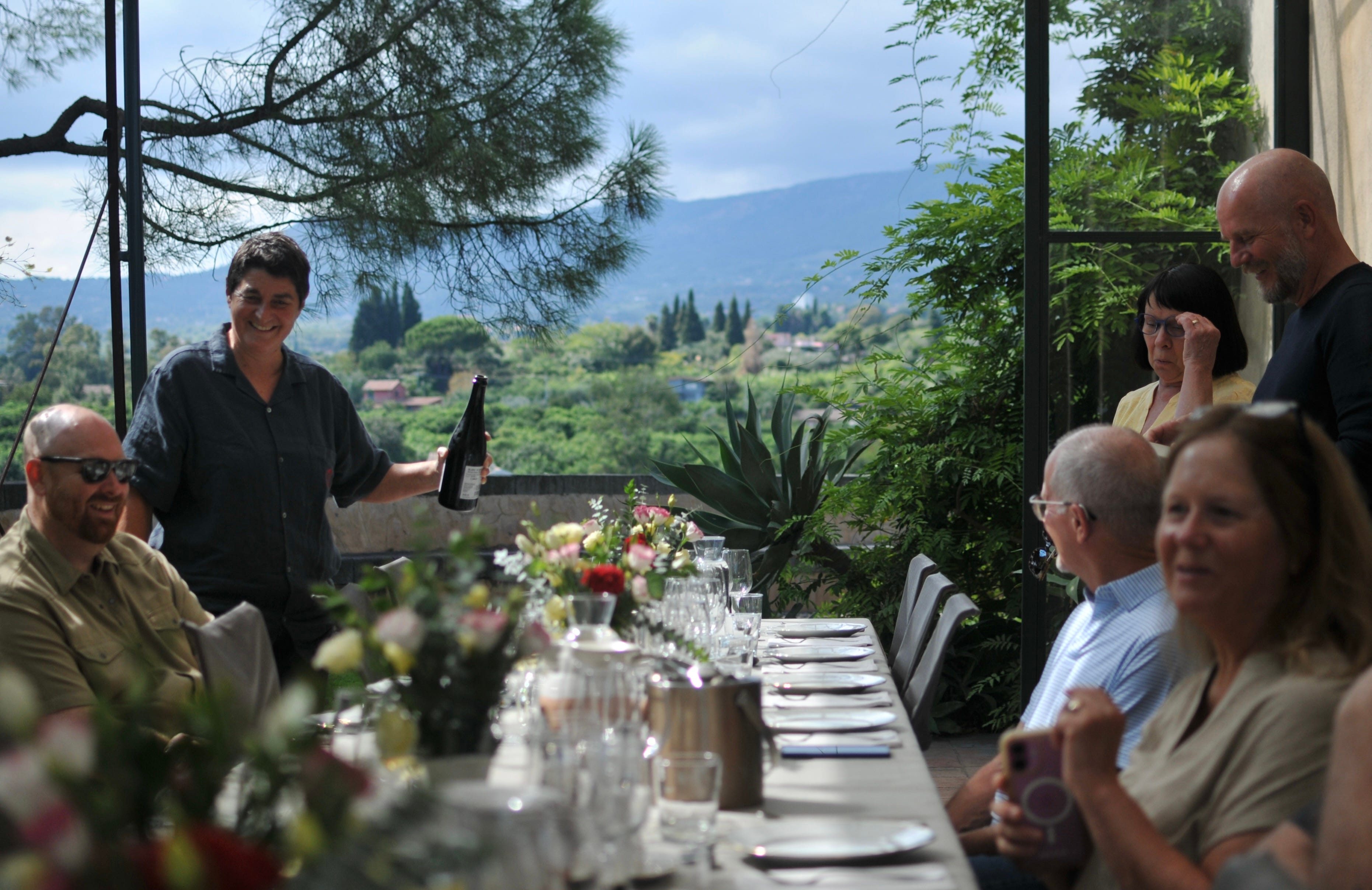
The Sicilian wine harvest.
I spent the week before last in the shadow of Mount Etna at the magical Rocca delle Tre Contrade. The reason? A retreat designed around the Sicilian wine harvest. Yes, Mount Etna “let off some steam,” which caused travel challenges for a few of those in our group. And yes, it was as fabulous as you can imagine.
Per usual, this was a fairly last-minute booking for me. Everyone kept asking me what I had on the calendar for summer travel. The truth was I had nothing planned beyond my annual July visit to Canada. And yet I sensed that something was going to come up and for once I didn’t rush to fill the empty space.
Then at the end of July, an newsletter containing a list of creative retreats and workshops landed in my inbox. It was the Club Yolo by Yolanda Edwards paid email. There were two of the retreats in the body of the email with another 54 behind the paywall. Did I pay to subscribe? Curiosity piqued, I certainly did.
I took the email as my sign to see what might be there for me. And there were a few that resonated, all in Europe and all centered around hands-on learning, food, and wine. It was mid-August by the time I decided on and booked the Sicilian Wine Harvest for the last week of September. Leaving me with five weeks of anticipation (and a decidedly lame attempt to brush up on my Italian).
Be committed.
Before I dive into what we learned from the Sicilian winemakers we had the privilege of meeting, I want to introduce the players. The retreat was entirely shaped by their approach to wine and life.
The owners of Rocca delle Tre Contrade, Jon Moslet and Marco Scirè, are deeply committed to sustainable agriculture, food, and wine, and the people who produce it. Every aspect of Tre Contrade aligns with this commitment (more on this in my next newsletter). There was a mutual respect evident amongst everyone we met that made all of our experiences possible.
Our wine expert for the week was the utterly engaging Isabelle Legeron, France’s first female Master of Wine and one of only 421 MWs worldwide. She’s also the founder of RAW WINE, a global natural wine community.
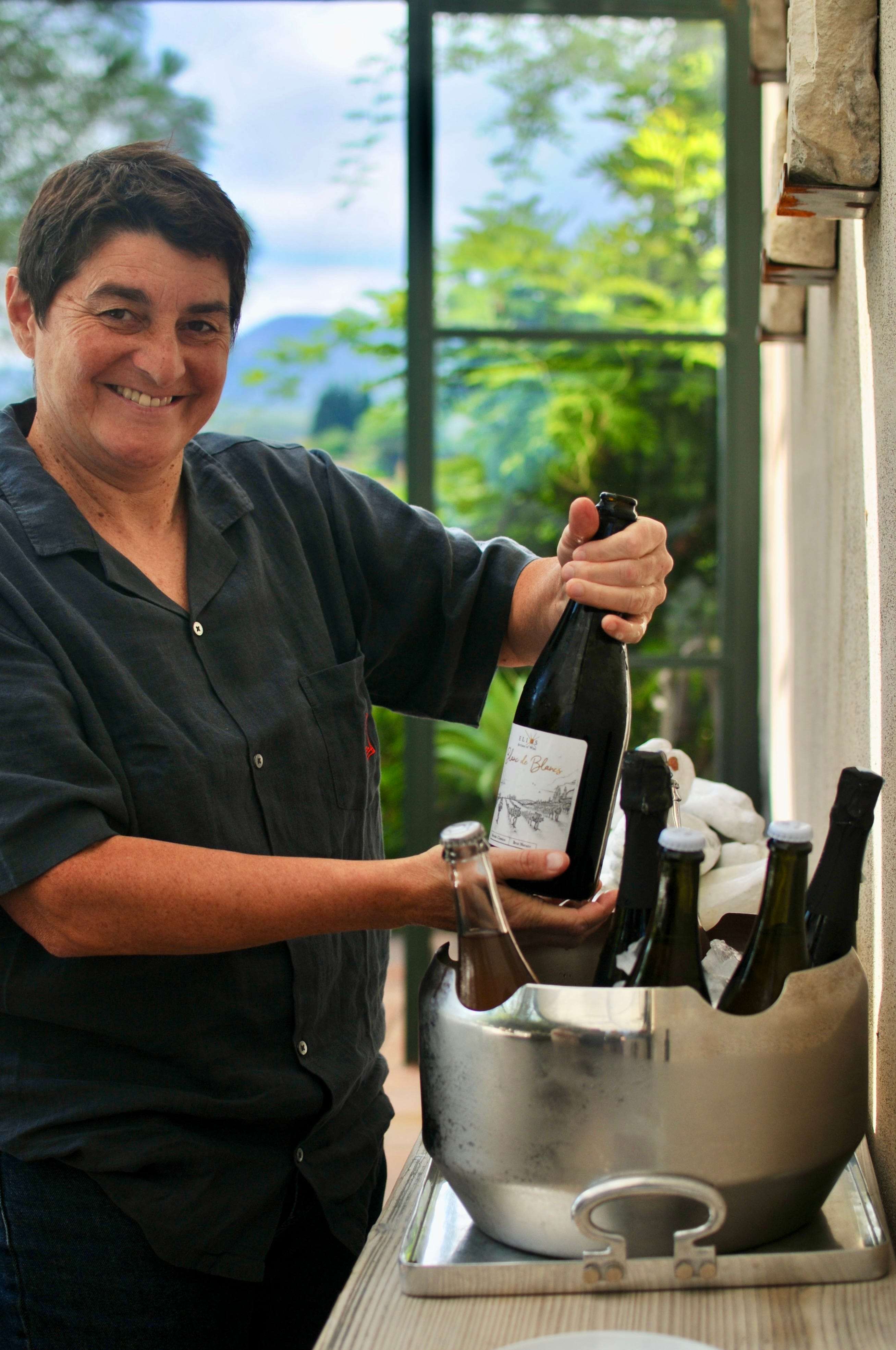
That was our theme for the week. Meeting local winemakers and tasting their wines (while eating the most delicious food prepared by the chef Dora and her team at Tre Contrade).
All of the winemakers use minimal intervention to grow their grapes and produce their wine (think no chemicals, pesticides, or sulphites, in the growing, fermentation, and bottling processes). A few of them have their vines at elevation on Mount Etna. Others in terrain further south and west. Throughout the week, we went to them and they came to us.
These are small to medium (by Sicily standards) winemakers (150,000 bottles per year was on the high side). They have small teams and do much of the work themselves, mostly by hand. They’re scrappy and individualistic. They do things their way and respect their winemaker peers whose approach to winemaking is different from theirs. My head exploded with their stories and how they each approach making their wines.
I left utterly inspired by their ingenuity, fortitude, and resilience.
And yes, their amazing (sometimes challenging) wines.
They make wine their own way.
That was the thing that most stood out to me. Every winemaker, both young and old, was growing their grapes and making their wine in their own distinct way. Part of this is driven by the particular “terroir” in which they’ve located their vineyard.
Terroir (pronounced ter-wär) is the complete combination of natural and environmental factors—such as soil, climate, topography, and sunlight—that gives agricultural products like wine grapes their distinct, characteristic flavor and sense of place
Source: Merriam Webster
While on Etna we learned that the landscape changes quickly and a grape that thrives on one parcel of land (a “contrade”) will not do so in another 100 or 200 meters above or below.
The other part is their philosophy of winemaking and how they feel they can bring out the best of what a particular vintage has to offer.
One young winemaker, Nicolò Grippaldi, who came to the villa to share his wines and story over aperitivo and dinner produces his wines biodynamically. Using this system, there are Root Days, Fruit Days, Flower Days, and Leaf Days. Nicolò also follows the cycles of the moon. This was a new concept for me, but when he (and Isabelle) explained the concept, it made some much sense. Think about the moon and the tides. The same idea applies to water in the vines (this is an incredibly rudimentary explanation!).
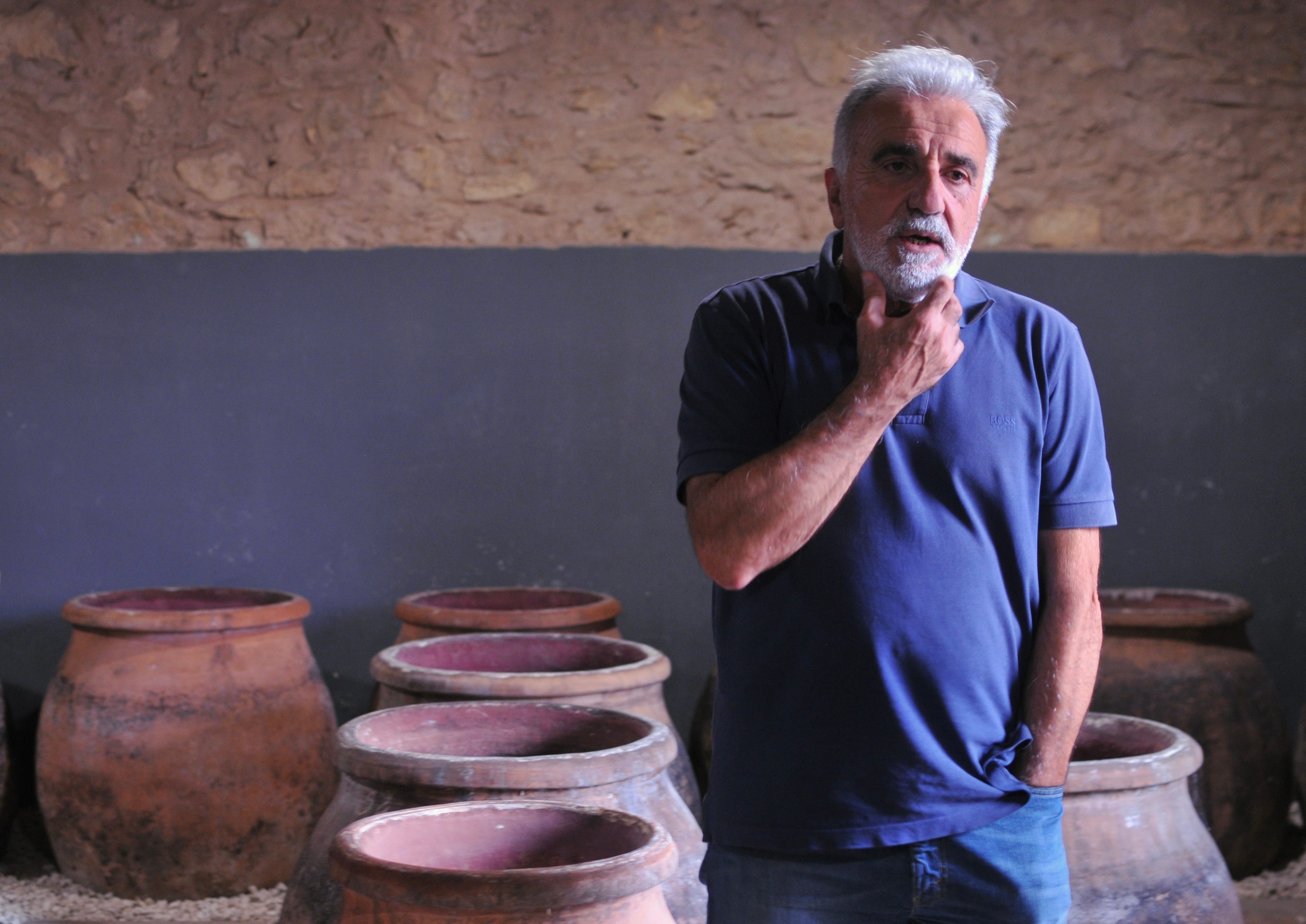
When we visited Azienda Agricola COS, winemaker Giusto Occhipinti told us that at one point early in his winemaking journey he came to believe that his wines were derivative. There was nothing that made them dramatically different than the other wines in the area. So he went in search of something… in Georgia (the country, have you seen Drops of God on Apple TV?). Through a beautifully long (and crazy) story, Giusto told us how he found his way to make exceptional wines in Sicily, the Georgian amphora (pictured below).
This is a taste (pun intended) of how these winemakers do things their own way. They’re not looking at what other winemakers are doing. The night that Nicolo Grippaldi came to Tre Contrade, he was joined by Giuseppe Grasso of Stanza Terrana. Both produce on Etna and yet Giuseppe’s approach was unique to his terroir and philosophy of wine. There is no right or wrong way, there’s simply their way.
Yes, this is intended to get you thinking about your own business… both your terroir and your philosophy.
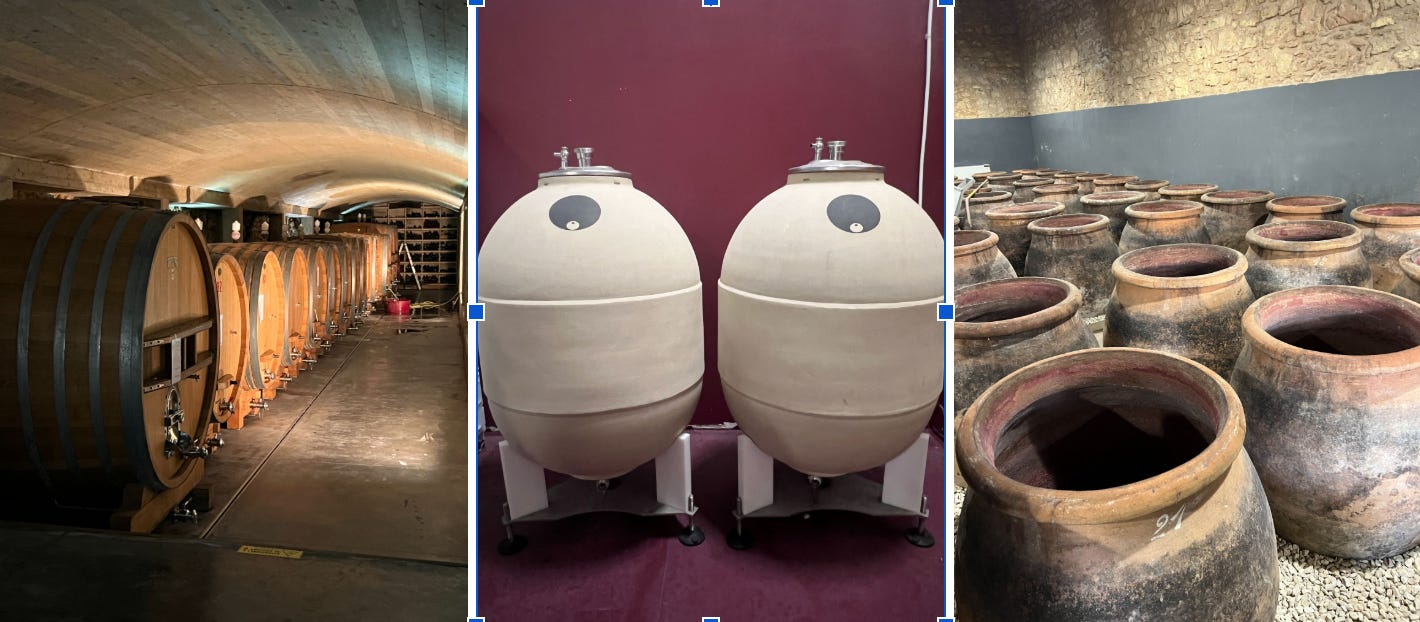
They run experiments.
If you’ve been around this email for awhile, you know I love this. I call them tests, but the idea is the same — you never know what’s going to work until you give it a go. Several winemakers we met, said exactly that… “I ran a little experiment.” Often it was in their garage, where they first fermented their wines, or in the vineyard itself, trying out different grapes and techniques.
Our first vineyard visit was to Gustinella, a small artisanal natural wine estate founded in 2020 by (young!) winemaker Sonia Gambino in the high-altitude village of Maletto on the western slopes of Mount Etna.
Sonia is a marvel and her story was so beautiful it had us almost in tears. To start, it’s important to know that many of the small vineyards in the area of Maletto are owned by families who produce wine for their own consumption. Seeking refuge in a familial home during COVID, she developed a relationship with an 80-year-old local farmer named Don Vincenzo. He agreed to allow Sonia to rent (paid in wine) and restore his neglected centenarian vineyards and produce a small batch of wine in her garage. She told us it was an experiment.
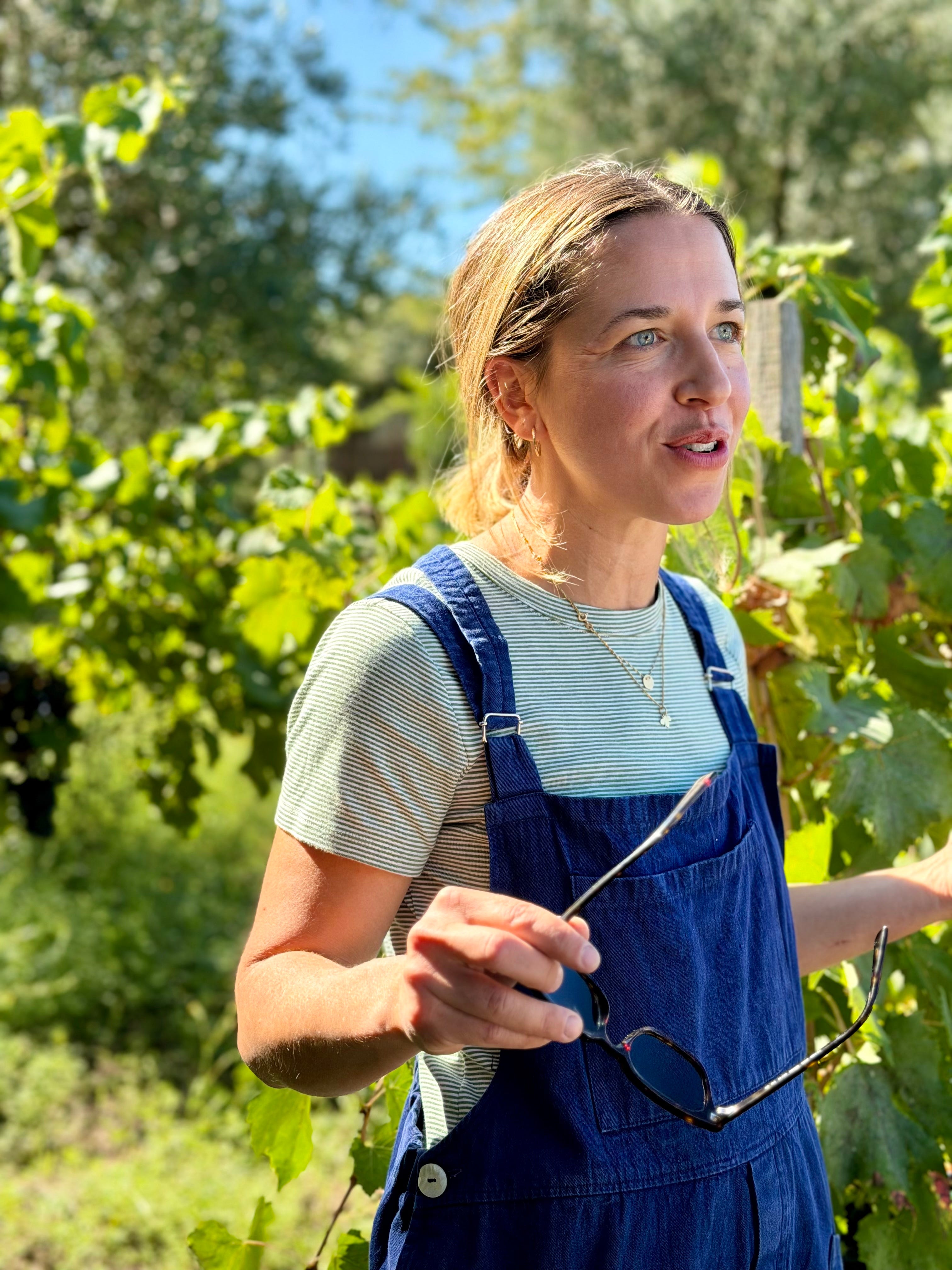
Maletto being a small town, word spread quickly, and other landowners came to Sonia with requests to use their grapes. Her first wine was a success. Six years later, she oversees 12 small vineyards, roughly half of which she owns, producing wines (reds, whites, rosatos, mostly blends) that are sought out and sell out (6,000-7,000 bottles per year).
Not everything is on the line when you run an experiment. Ideally, you’ve not made a significant investment financially and in terms of your time. As a result, you can be looser, a bit playful even, in your approach. This was echoed across the other winegrowers we met. Try new things. Don’t “bet the farm” when you do.
They take risks.
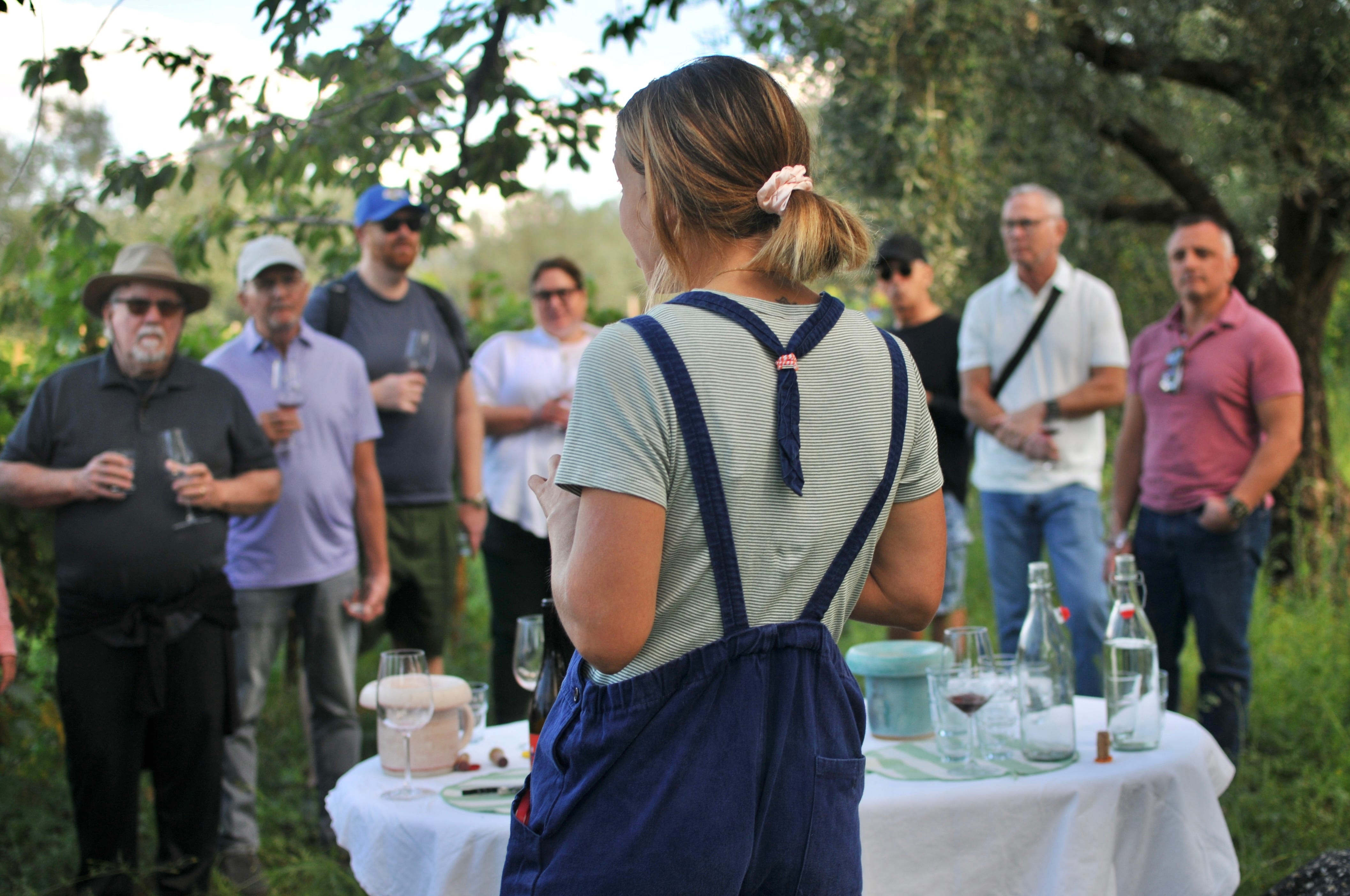
At the start of the retreat, Isabelle presented her take on natural wines and the winemaking process. For me it was a much-needed 101 course on the difference between conventional and natural winemaking.
It’s much easier to grow grapes and produce wines in a conventional manner. This means clearing the ground of undergrowth (plants in their natural habitat), planting vines in long, clean lines, using pesticides, and adding sulphites to preserve the wine once it’s in the bottle.
But “easy” does not mean “best.” Taking a more challenging path and risking more, that’s where the opportunity to stand out lies.
“It is never through ease that one obtains great things.”
~ Bernard Noblet of Domaine de la Romanée-Conti (from Isabelle’s presentation)
They pay attention to the details (and the mundane).
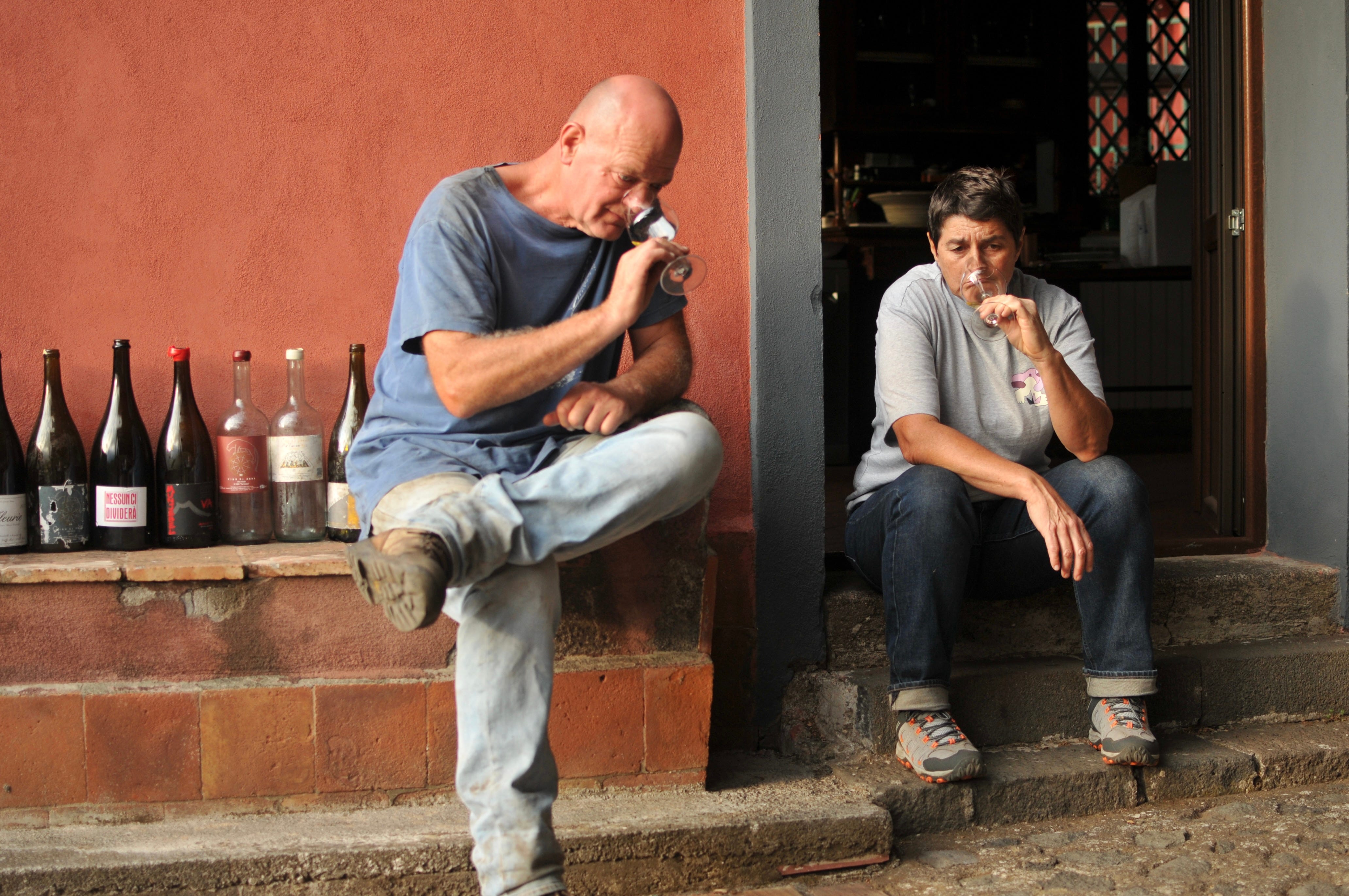
The first winemaker to join us as the villa was Simone Rizzo, who alongside his father, Filippo, runs Lamoresca, which “spans 25 hectares of organically farmed land, with half devoted to vineyards that cascade across sandstone soils mixed with calcium and iron-rich clay at 450 meters above sea level.” (SelectioNaturel)
Simone shared that there is no irrigation built to water their vines. And because of the composition of the soil, the plants rely on rain water. It’s a challenging environment and as a result the vines “suffer.” They have to work to survive. And it’s this work, combined with the soil and biodiversity of the environment, that make Lamoresca wines amongst the best in the region. Suffering produces good grapes.
I wrote about this idea of of suffering producing richer, more complex wines here.
“It’s all in the little things.”
~ Simone Rizzo
Simone also recounted a story. Not long ago, a friend from France visited him at the vineyard. They spent time doing the daily work of tending to the grapes and making the wine. His friend commented that all you do is clean. And Simone told him that 70% of the job is cleaning.
The cleaning is a part of the process. It’s the routine things done, day in and day out, that make for an excellent product.
They adapt to changing circumstances.
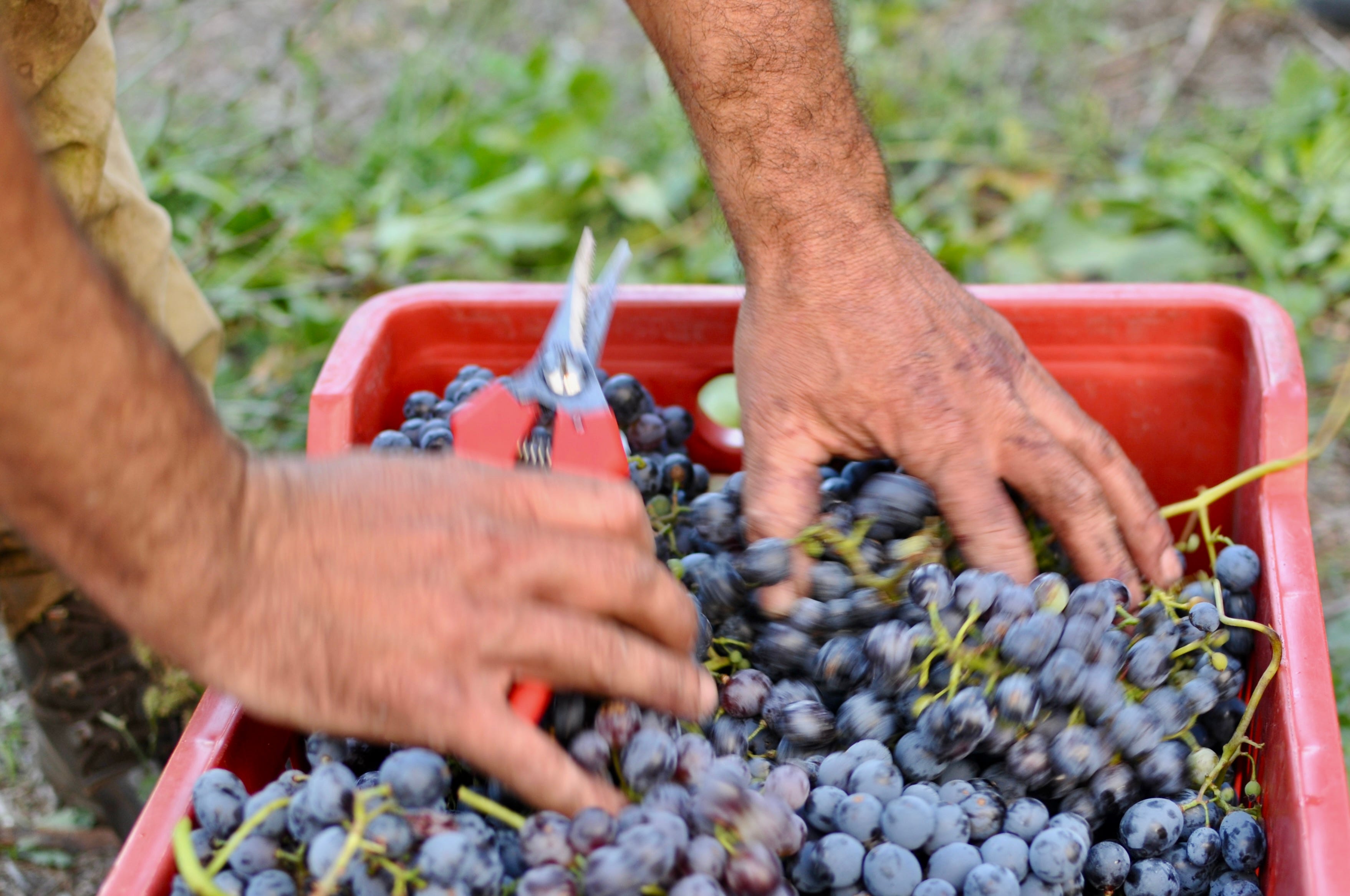
At a winemaker’s dinner, Nicolò Grippaldi shared that he’d already completed his harvest, which was unusual. It’s usually a 6-week process. However, this summer there was a lot of rain and it was hot. The result of this weather was that everything was ready to pick at the same time leaving him with only 26 days to harvest all of his grapes.
Weather = circumstances beyond your control.
How do you make those circumstances work for you? It’s not always possible, I get that. That said, I think there’s the possibility to do so more often than we give ourselves credit for.
Their relationships are not transactional.
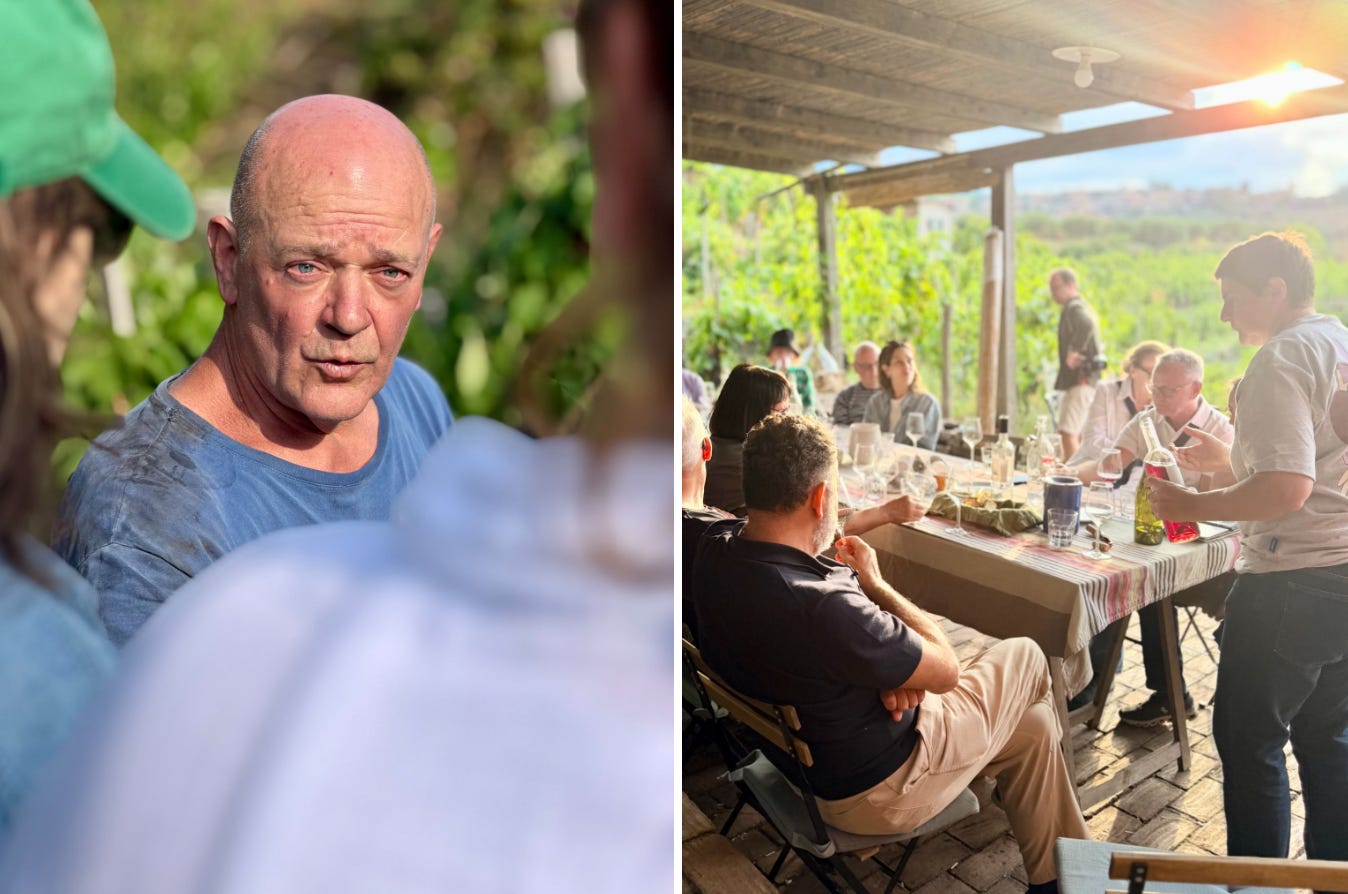
The experiences we were privileged to have throughout the week were entirely made possible because of the relationships created by Isabelle, Jon, and Marco. As you can no doubt imagine, the harvest is a busy time for all winemakers. And yet… they made time for us.
Some drove up to 4 hours to join us for a winemaker’s dinner. Others hosted us at their vineyards. All of them shared their stories and their wine.
None of interactions were “quid pro quo.” Isabelle, Jon, and Marco have respect for how these winemakers bring their product into the world and the winemakers have respect for Isabelle’s advocacy and what she’s building with RAW WINE, and the same is true for Jon and Marco and Tre Contrade.
These are real relationships and everyone wins.
They know the difference between good and magic.
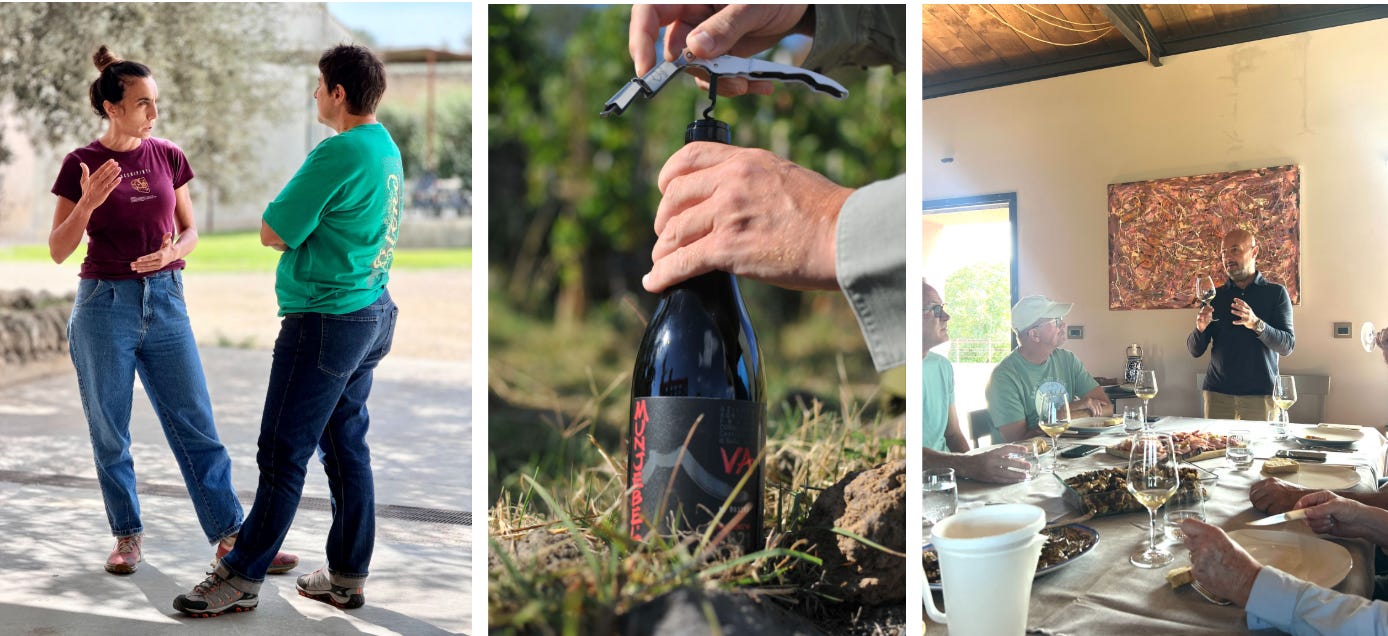
Restauranteurs becoming winemakers. This is the story of Filippo Rizzo and it was the story of Vino di Anna cofounder (alongside his wife Anna). Eric met us in one of his vineyards and drew us a map of the area in the soil. He explained this particular terroir — the soil, the winds, the rain. He shared that he lost his entire crop in 2023 due to mildew after severe rains and having no copper on-hand to treat the mildew.
While still in his vineyard, before going to his home and winemaking facility to taste his wines, olive oil, and honey, Eric said this (and I’m paraphrasing).
You can be given the recipe on how to make something and yet… that recipe can be made in different ways. Who’s making the recipe? What are they bringing to it that no one else is?
The difference in the making between good and magic is small but the results can be massive.
~ Eric Naroo
They embrace constraints and sometimes choose to work outside the system.
I’ve written about the upside of constraints in the creative process. In the case (pardon the pun), of the winemakers we met, especially those on Mount Etna, there are rules around naming that impact how a winemaker can label their wines.
A short naming lesson (with an assist from ChatGPT)…
“There is a specific legal designation governing which wines can be labeled Etna DOC (Denominazione di Origine Controllata), and elevation is part of the story.
Etna DOC was established in 1968, making it Sicily’s first DOC wine designation. It protects wines produced within a legally defined geographic area on the slopes of Mount Etna.
To qualify, a wine must meet several requirements, including:
Geographic location: The grapes must come from vineyards within the officially designated Etna DOC territory, covering portions of 20 municipalities.
Elevation: The designated territory has elevation boundaries, but there is not one universal maximum elevation for every vineyard.
Grape varieties: Red wines must contain at least 80% Nerello Mascalese, while standard white wines must contain at least 60% Carricante.
Production standards: Winemakers must comply with rules governing yields, winemaking, aging where applicable, and other production requirements.
In terms of elevation, the official regulations establish geographic boundaries that follow different elevations depending on the particular slope and location. Some areas have an upper boundary around 600 meters, while others extend to approximately 1,000 meters.
On the eastern slopes, where you spent much of your time, vineyards commonly reach elevations approaching 900 meters.”
The reality is a winemaker can produce an excellent wine using grapes grown on Mount Etna, but if those grapes come from a vineyard outside the legally designated DOC boundaries, the wine cannot be labeled Etna DOC. The Etna designation is deemed desirable because it helps to sell wine.
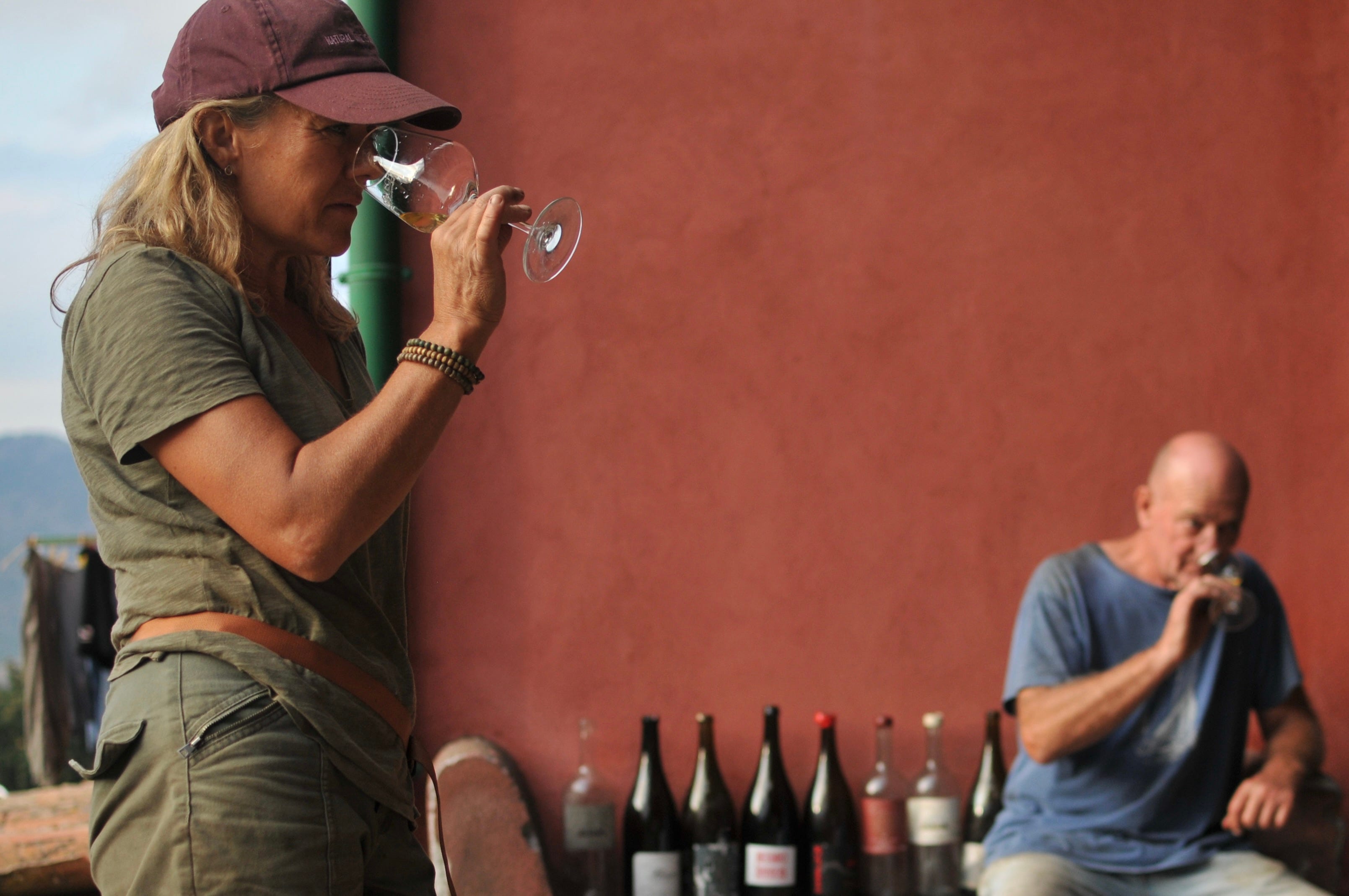
The distinction doesn’t necessarily say anything about its quality. Sonia Gambino of Gustinella is an example of this. She can’t put Etna DOC on her labels. But she can determine how she communicates the value of what she does have to offer: high-elevation vineyards, old vines, unusual grape varieties, and a distinctive terroir.
She doesn’t treat the lack of designation as a deficiency, rather she uses the characteristics of Maletto central to her positioning. Not every business benefits from belonging to the most recognizable category. Sometimes the differences are the value.
Anna Martens and Eric Naroo of Vino di Anna operate vineyards across multiple locations, both inside and outside the DOC territory, including some at very high elevations. Their priority is producing wines that express the particular characteristics of their vineyards rather than following one standardized approach to wine production or one classification.
It’s the difference between the circumstances you’re handed and the strategic choices you make in response. You don’t always have the credentials, recognition, market position, or resources of established competitors. But that doesn’t mean you have nothing valuable to offer. It means you need to be particularly clear about what makes your work worth choosing. As I always say, “what makes you, you?”
“Prima di essere buono, un vino deve essere Vero!”
“Before being good, a wine must be true!”
~ Winemaker Frank Cornelissen
More is not always more.
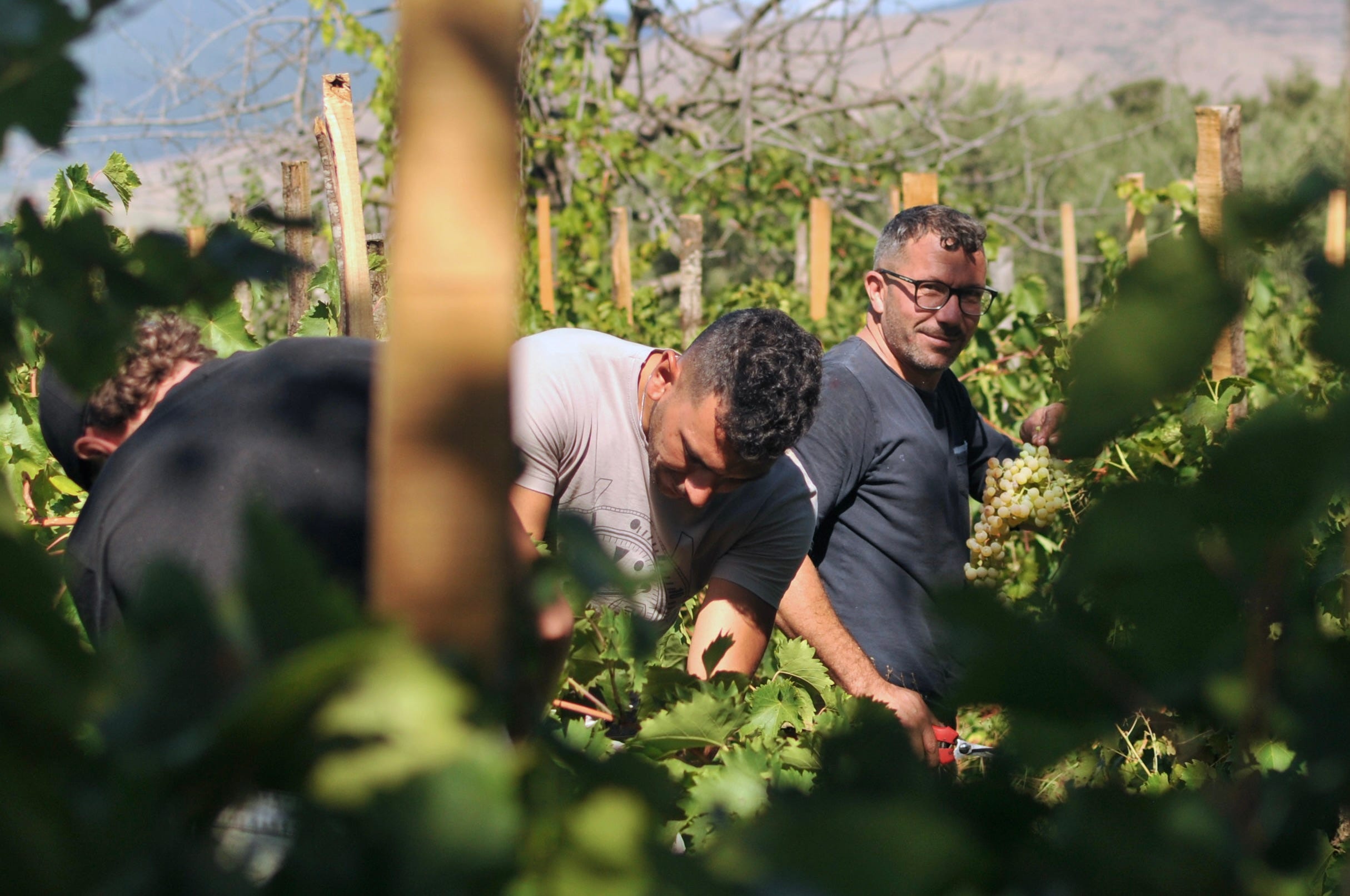
Most of the producers we met not in the “more is more” game. Their annual production is small by most winemaking standards. Much of the work is done by hand, most often by the winemakers themselves and their very small teams. And they love what they do.
Winemaker Francesco Guccione drove four hours from Western Sicily to share the story of his “soulful and uncomplicated” wines with us. He has an incredibly small team and he told us he wants to make it even smaller… only him. He has other passions he wants to pursue. He wants to make his wine his way and live life his way.
Isn’t that always the goal?

Natural wine producers to seek out:
Cin cin!
Katherine
#ICYMI


